
How water damage insurance claims work in California
A water damage claim in California usually runs in five steps: stop the damage and make temporary repairs, document everything, report the claim, meet the adjuster, then repair. State regulations set deadlines for insurers to acknowledge, decide and pay. Your insurer decides coverage. A restoration contractor like AssurePro documents the damage and does the work.
How long your insurer has
Set by California's Fair Claims Settlement Practices Regulations.
- 15calendar daysfor your insurer to acknowledge a claim after you notify them.10 CCR § 2695.5(e)
- 40calendar daysto accept or deny the claim after receiving proof of claim. If more time is needed, the insurer must tell you in writing every 30 days.10 CCR § 2695.7(b), (c)(1)
- 30calendar daysto pay an accepted claim after it is accepted.10 CCR § 2695.7(h)
The five stages of a claim
Every policy is different, but most water damage claims follow this path.
Step 1: Stop the damage, safely
Shut off the water and prevent further damage. The California Department of Insurance advises making reasonable temporary repairs to protect your property and keeping every receipt.
Step 2: Document before cleanup
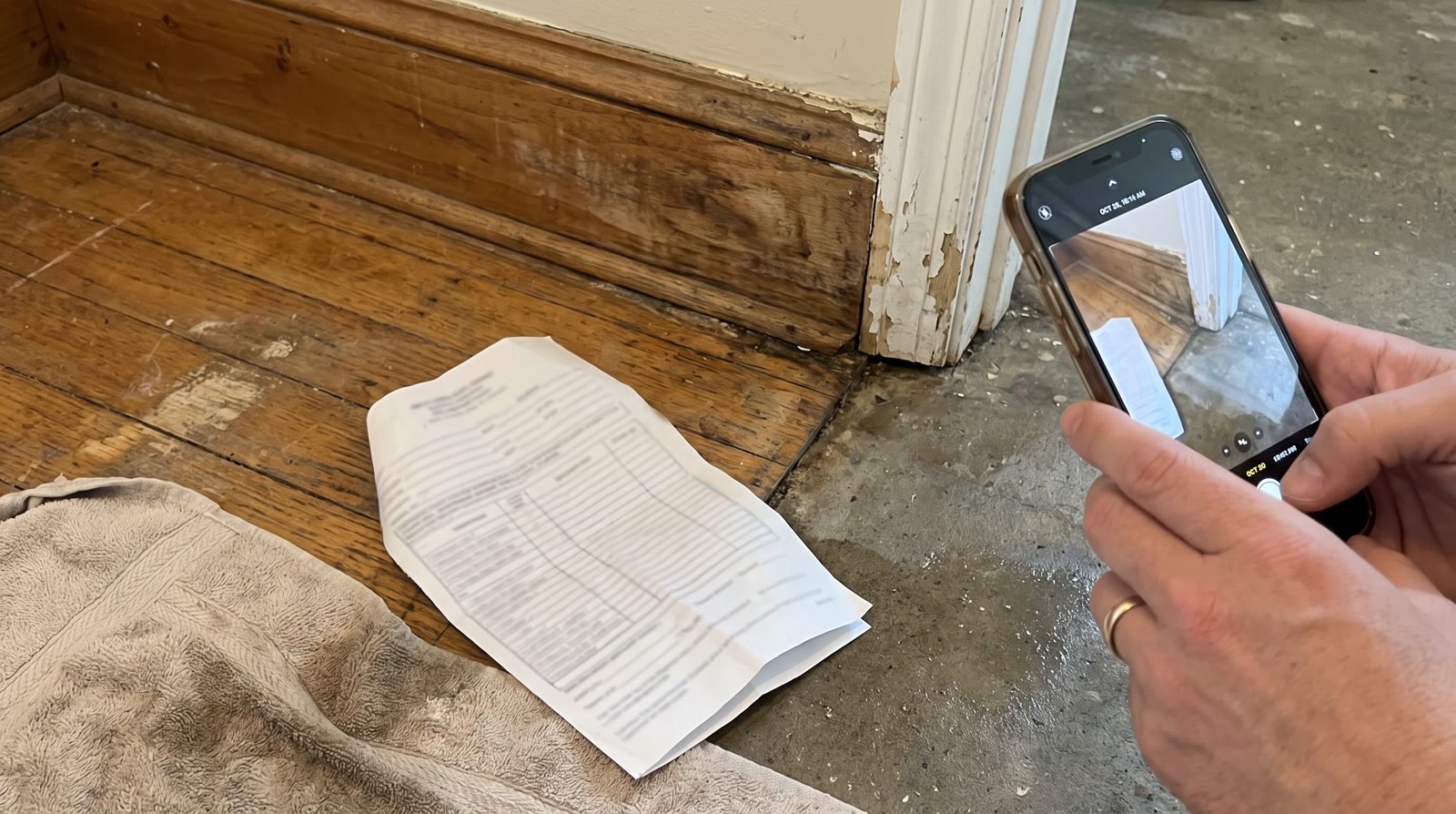
Photograph and video every affected room, the source of the water and damaged belongings before anything is moved. Ask your insurer before you throw anything away.
Step 3: Report the claim
Contact your insurance company or agent, write down the claim number, and start a log of every call and email: date, who you spoke to and what was said.
Step 4: Meet the adjuster
Your insurer assigns an adjuster to review the loss. Share your photos, receipts and your contractor's documentation, and ask for anything important in writing.
Step 5: Decision, repairs and payment
Your insurer explains what the policy covers and how it values the loss. Repairs proceed, and you keep copies of the scope, invoices and payments.
Terms you'll hear
General explanations only. Your policy's wording is what counts.
- Deductible
- The portion of a covered loss you pay before insurance pays the rest. The amount is set by your policy and listed on your declarations page.
- Actual cash value vs. replacement cost
- Actual cash value accounts for depreciation. Replacement cost is what it takes to repair or replace with materials of like kind and quality. Your policy says which one applies. The CDI claims guide explains both.
- Additional living expenses (ALE)
- If your home can't be lived in during repairs, many policies help with the extra cost of living elsewhere. The CDI advises keeping receipts for these expenses.
- Sudden vs. gradual damage
- Policies often treat a sudden, accidental leak differently from damage that built up over time. Read the exclusions section of your policy and ask your insurer how it applies to your loss.
- Flood
- FEMA notes that most homeowners insurance does not cover flood damage. Flood coverage is generally a separate policy, and FEMA notes a typical 30-day waiting period before a new flood policy takes effect.
- Mold
- Mold coverage often depends on what caused the moisture and may carry its own limits. The EPA advises drying water-damaged areas within 24 to 48 hours to prevent mold growth.
What AssurePro does, and what we don't
We are a restoration contractor, not a public adjuster. Knowing the difference protects you.
What we help with
- Stopping the damage: extraction, drying, tarping, board-up and containment
- Documentation: photos, moisture readings and a written scope of work
- Sharing that documentation with you and your adjuster on request
- Explaining what we found and what each step of the work involves
- Room-by-room inventory of belongings during a contents pack-out
- Repairs and rebuild under California contractor license CSLB #1114139
What we don't do
- Decide what your policy covers. Only your insurer does that.
- Negotiate or dispute your claim on your behalf.
- Act as a public adjuster or give legal advice.
- Promise that a claim will be approved or how much it will pay.
Your documentation checklist
Good records make every conversation with your insurer easier. Start them on day one.
- Photos and video of every affected room, before cleanup
- Photos of the source: the pipe, appliance, roof or drain
- A list of damaged belongings, with photos
- Receipts for temporary repairs and emergency supplies
- Receipts for hotel, meals and other extra living costs
- Your policy's declarations page
- Claim number, adjuster name and a log of every contact
- Your contractor's moisture readings, scope and invoices
Insurance questions we hear
Does homeowners insurance cover water damage in California?
It depends on your policy and on what caused the water. Policies often treat sudden, accidental water damage differently from long-term leaks, and FEMA notes that most homeowners insurance does not cover flood damage. Read your declarations page and exclusions, and ask your insurer how they apply to your loss.
Should I start cleanup before the adjuster comes?
Protect your property from further damage. The California Department of Insurance advises making reasonable temporary repairs and keeping receipts. Photograph and video everything first, and ask your insurer before discarding damaged items.
How long does my insurer have to respond to a claim in California?
Under California regulations, insurers must acknowledge a claim within 15 calendar days of notice, accept or deny within 40 calendar days of receiving proof of claim (with written updates every 30 days if they need more time), and pay within 30 days of accepting it. See 10 CCR 2695.5 and 2695.7.
What is a deductible?
It is the portion of a covered loss you pay before your insurance pays the rest. The amount is set by your policy and shown on your declarations page.
Is AssurePro a public adjuster?
No. AssurePro Restoration is a licensed restoration contractor. We stop the damage, document what we find, and repair it. In California, public adjusters are separately licensed by the Department of Insurance. For questions about your rights, contact your insurer, a licensed professional, or the CDI consumer hotline at 1-800-927-4357.
What documentation can AssurePro provide?
Photos of the damage, moisture readings, and a written scope of the work. We can share that documentation with you and your adjuster on request. During a contents pack-out we also create a room-by-room inventory.
Stop the damage first. We'll document it.
Call any time. We answer day or night, get the water stopped and drying started, and keep clear records you can share with your insurer.
Based in Anaheim. We answer day or night. Office hours Mon–Fri 8:30am–4:30pm.